
When to Start Seeds Indoors
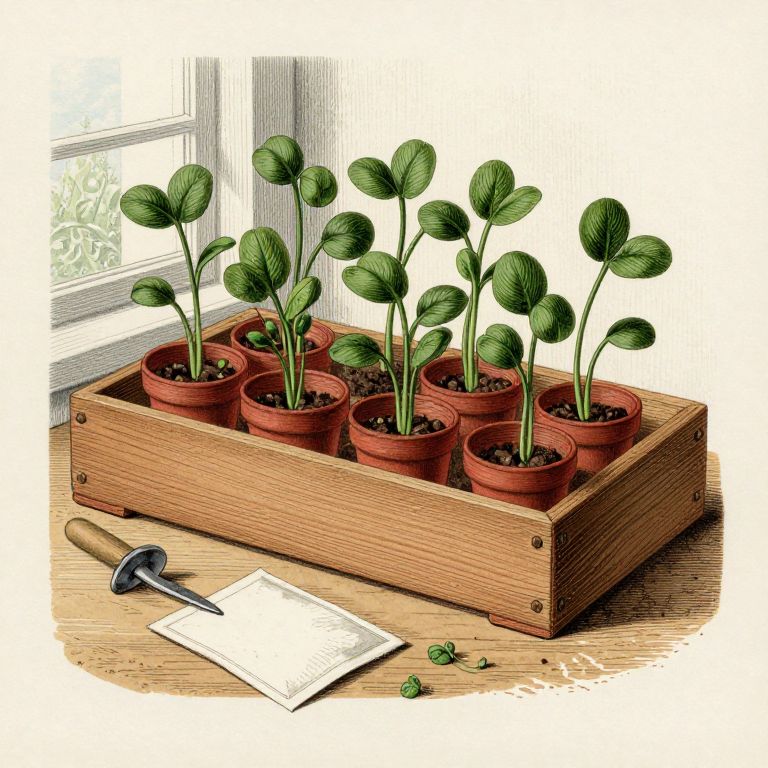
Every indoor sowing date is a count-back from your last frost. Slow crops need the most lead time: celery, onions and leeks at 10–12 weeks, peppers and eggplant at 8, tomatoes at 6–8, brassicas at 5–6, and cucumbers and squash at just 3–4. Find your last frost date, subtract the weeks, and that's your sowing date — no calendar month applies everywhere.
This is the part most guides get vague about, so here it is plainly: the month you should sow is a function of where you live, and the same crop can be a January sowing in Florida and an April sowing in Minnesota. The only number that transfers between gardens is the number of weeks before frost.
Look up your last frost date →
How many weeks before last frost, by crop
Dates in the last column are worked for zone 6b (last frost around April 10) as an illustration — get your own dates by ZIP code.
| Crop | Weeks before last frost | Germination soil temp | Zone 6b sowing window |
|---|---|---|---|
| Celery | 10–12 weeks | 60–70°F | Jan 16 – Jan 30 |
| Leek | 8–12 weeks | 65–85°F | Jan 16 – Feb 13 |
| Onion | 10–12 weeks | 60–85°F | Jan 16 – Jan 30 |
| Rosemary | 10–12 weeks | 65–70°F | Jan 16 – Jan 30 |
| Kale | 8–11 weeks | 60–85°F | Jan 23 – Feb 13 |
| Broccoli | 7–10 weeks | 60–85°F | Jan 30 – Feb 20 |
| Cabbage | 7–10 weeks | 60–85°F | Jan 30 – Feb 20 |
| Pepper (sweet/bell) | 6–10 weeks | 70–90°F | Jan 30 – Feb 27 |
| Chives | 8–10 weeks | 65–70°F | Jan 30 – Feb 13 |
| Common Thyme | 8–10 weeks | 65–70°F | Jan 30 – Feb 13 |
| Greek Oregano | 8–10 weeks | 65–70°F | Jan 30 – Feb 13 |
| Cauliflower | 6–9 weeks | 65–85°F | Feb 6 – Feb 27 |
| Eggplant | 6–8 weeks | 75–90°F | Feb 13 – Feb 27 |
| Sweet Potato | 6–8 weeks | 65–70°F | Feb 13 – Feb 27 |
| Basil | 6–8 weeks | 70–85°F | Feb 13 – Feb 27 |
| Garden Sage | 6–8 weeks | 65–70°F | Feb 13 – Feb 27 |
| Parsley | 6–8 weeks | 65–70°F | Feb 13 – Feb 27 |
| Spearmint | 6–8 weeks | 72–75°F | Feb 13 – Feb 27 |
| Calendula / Pot Marigold | 6–8 weeks | 60–70°F | Feb 13 – Feb 27 |
| French Marigold | 4–8 weeks | 70–80°F | Feb 13 – Mar 13 |
| Sweet Alyssum | 6–8 weeks | 65–70°F | Feb 13 – Feb 27 |
| Tomato | 5–7 weeks | 65–85°F | Feb 20 – Mar 6 |
| Bok Choy | 4–6 weeks | 50–70°F | Feb 27 – Mar 13 |
| Collard Greens | 4–6 weeks | 50–70°F | Feb 27 – Mar 13 |
| Kohlrabi | 4–6 weeks | 50–75°F | Feb 27 – Mar 13 |
| Lettuce | 4–6 weeks | 45–80°F | Feb 27 – Mar 13 |
| Spinach | 5–6 weeks | 45–68°F | Feb 27 – Mar 6 |
| Swiss Chard | 4–6 weeks | 55–75°F | Feb 27 – Mar 13 |
| Watermelon | 2–5 weeks | 70–95°F | Mar 6 – Mar 27 |
| Cucumber | 2–4 weeks | 70–90°F | Mar 13 – Mar 27 |
| Pumpkin | 3–4 weeks | 70–90°F | Mar 13 – Mar 20 |
| Nasturtium | 3–4 weeks | 60–65°F | Mar 13 – Mar 20 |
| Sunflower | 2–3 weeks | 70–75°F | Mar 20 – Mar 27 |
| Winter Squash (Butternut) | 1–2 weeks | 65–75°F | Mar 27 – Apr 3 |
| Cantaloupe (Muskmelon) | 1–2 weeks | 65–75°F | Mar 27 – Apr 3 |
Crops to sow direct instead
Some crops are actively harmed by transplanting. Root vegetables fork or stall when their taproot is disturbed, and large-seeded crops germinate so fast outdoors that starting them inside buys you nothing.
The five mistakes that cost a season
- Starting too early. Enthusiasm in February produces a leggy tomato in a 4-inch pot by April with nowhere to go. A seedling started at the right time overtakes an overgrown one within a fortnight of planting out.
- Not enough light. A windowsill is not enough light for a vegetable seedling. If your seedlings are stretching, leaning, or pale, that's the diagnosis. Hang an LED shop light 2–4 inches above the leaves and raise it as they grow.
- Sowing into garden soil or potting compost. Use a fine seed-starting mix. Garden soil compacts in a tray, drains badly, and brings in damping-off fungus that will flatten a tray of seedlings overnight.
- Skipping hardening off. Seedlings raised indoors have no wind conditioning and no UV tolerance. Move them outside for progressively longer spells over 7–10 days before planting; skip it and you can lose the lot to one bright, breezy afternoon.
- Planting out on the last frost date. That date is a median — half of years the last freeze comes later. Wait one to two weeks past it for tender crops, or keep row cover to hand.
Soil temperature, not air temperature. Seeds germinate on the temperature of the medium they're in. A 68°F room can hold a seed tray at 62°F, which is enough to make peppers sit dormant for three weeks. A cheap soil thermometer removes all the guesswork here.
Next
Once your seedlings are ready, work out how many will fit the bed, check what should sit next to what, and lay the bed out square by square.
What seed starting actually needs
RequisitionFour of the five mistakes on this page are solved by equipment rather than technique. These are the ones that matter.
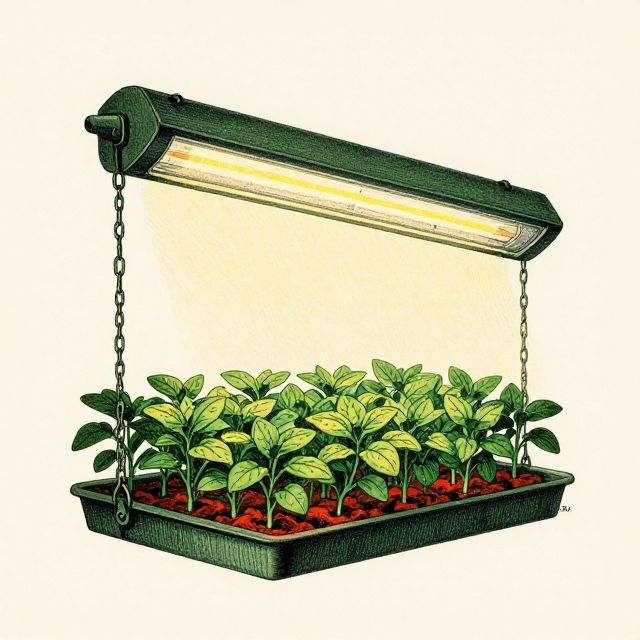
LED grow light (shop-light style)
The single biggest cause of leggy, flopping seedlings. A south-facing window gives a fraction of the light a seedling needs — hang this 2–4 inches above the leaves for 14–16 hours a day and the problem disappears.
Buy on coverage, not wattage claims. A 4 ft fixture spans two standard trays.
Check it on Amazon →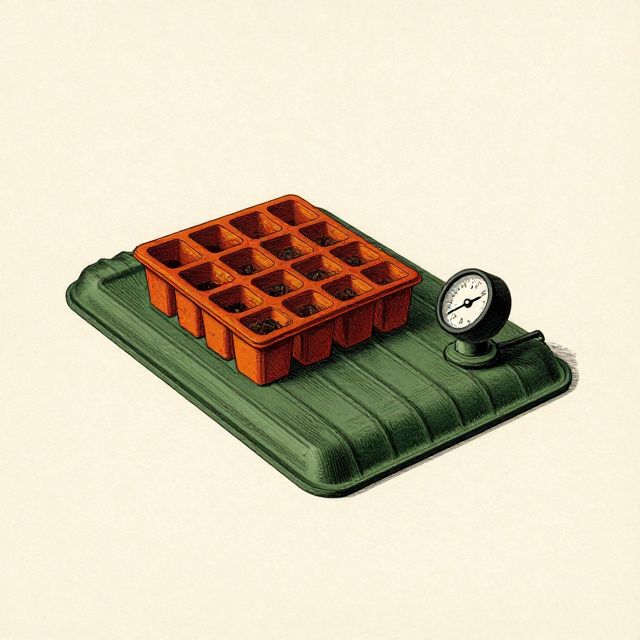
Seedling heat mat
Peppers and tomatoes germinate on soil temperature of roughly 75–85°F, which is above most room temperatures. Without a mat they sit dormant for weeks and gardeners assume the seed was dead.
Get one with a thermostat probe. Unregulated mats can cook a tray.
Check it on Amazon →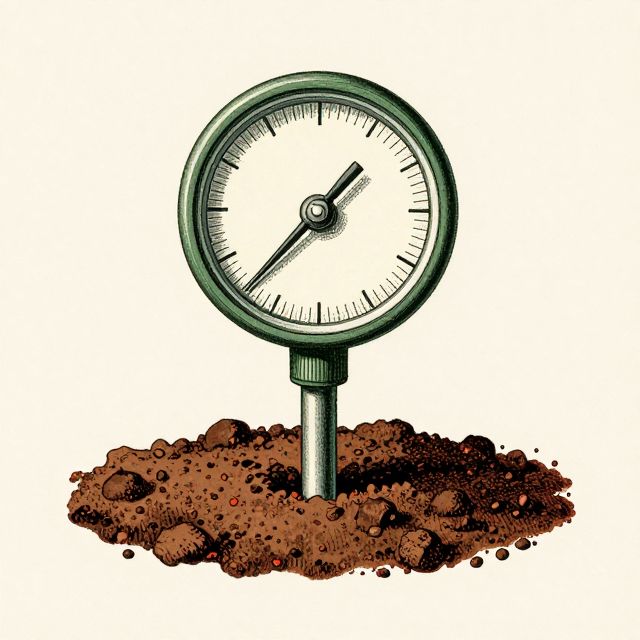
Soil thermometer
This site tells you to sow on soil temperature rather than air temperature or calendar date. A cheap probe is what makes that advice actionable — a 68°F room can hold a tray at 62°F.
Cheapest genuinely useful tool in the seed-starting list.
Check it on Amazon →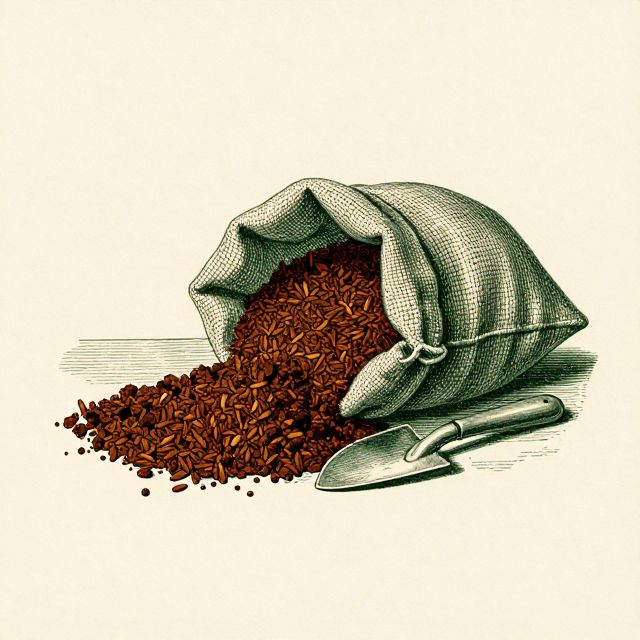
Seed starting mix
Garden soil compacts in a tray, drains badly and carries damping-off fungus that can flatten a whole tray overnight. A fine sterile mix is not the same product as potting compost.
Wet it before filling cells — dry peat-based mixes repel water.
Check it on Amazon →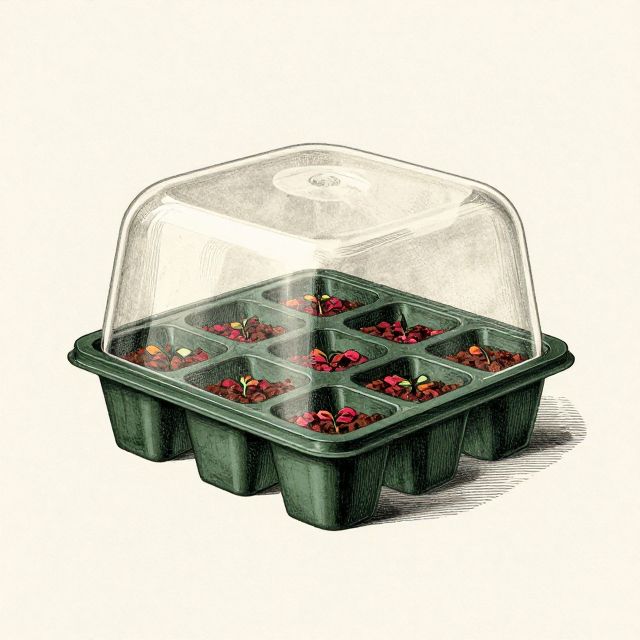
Cell trays with humidity dome
Consistent cell size means consistent watering, which is most of seed-starting success. The dome comes off the moment seedlings emerge — leaving it on is a fast route to damping-off.
Heavier-gauge trays last years; the thin ones crack in a season.
Check it on Amazon →As an Amazon Associate we earn from qualifying purchases. We link these because of what the evidence on this site says, not the other way round — nothing here is recommended on a claim we grade as unsupported, and we take no payment for a placement. How that works →