
Does Companion Planting Actually Work?
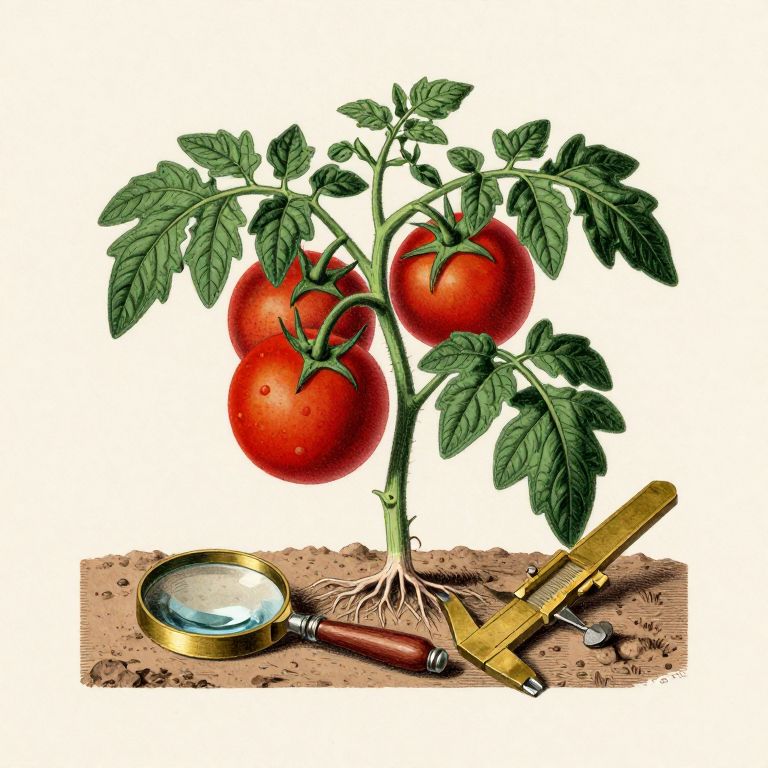
Partly — and much less than the charts suggest. We graded 542 companion planting pairings across 56 crops against the published literature. 129 (24%) are supported by controlled research. 379 (70%) are traditional practice for which we could find no controlled test at all. 34 have been tested and did not hold up, yet are still repeated on nearly every chart online. Companion planting is not nonsense; it is mostly just unverified.
Where the charts came from
Nearly every companion planting chart in circulation traces back, directly or at one remove, to Louise Riotte's Carrots Love Tomatoes (1975). It is a charming book. It also contains no experiments and no citations — it is a collection of garden lore presented as a reference work. Its pairings were copied into later books, then onto websites, then onto the printable PDFs that dominate search results today, gathering authority at every step without ever gaining evidence.
The title claim is a fair illustration: there is no evidence that carrots and tomatoes benefit each other, and Illinois Extension groups it with untested folklore. We grade it Not supported on both crops' records.
What genuinely holds up
Three mechanisms have real, measured evidence behind them. If you take nothing else from this page, take these.
1. Trap cropping
Planting a more attractive host around the edge of a crop, so pests concentrate there instead. This is the best-evidenced practice in the whole field. In UMass and UConn field trials, a perimeter of Blue Hubbard squash around butternut kept over 94% of striped cucumber beetles on the perimeter, reduced main-crop beetle numbers by up to 95%, and cut insecticide costs 92–96% — with the unsprayed main crop yielding as well as a conventionally sprayed field.
Similarly, a perimeter of glossy collards around cabbage held diamondback moth below action thresholds across nine Florida commercial fields, while 60% of unprotected controls exceeded them. Moths lay around three times more eggs on the collards, but larval survival there is 6.7% versus 22.2% on cabbage — the trap is also a trap.
The catch nobody mentions: an unmanaged trap crop makes things worse. WSU warns that if you leave it alone, pests simply reproduce and multiply on it and spill into the crop you were protecting. A trap crop is a commitment to destroying or treating it, not a decoration.
2. Insectary flowers
Flowers that feed the adult stage of predatory insects, whose larvae then eat your pests. Sweet alyssum is the standout: USDA-ARS and UC Davis work found aphid suppression associated with alyssum plantings measurable up to 50 feet away in lettuce systems.
The honest wrinkle is instructive. A UC IPM trial in 2019 found hoverfly counts were statistically similar across treatments, yet alyssum-alone fields still had fewer aphids — and fields that mixed alyssum with cosmos and cilantro performed no better than no insectary plants at all. So even the best-supported practice here comes with a boundary condition: the mixed "pollinator blend" version of the advice is not the version that was tested.
Borage and strawberries is the other well-measured pairing: Griffiths-Lee et al. (2020) recorded 35% more fruit by count and 32% more by weight, through improved pollination.
3. Intercropping and physical effects
Carrots and onions is the one classic pairing that genuinely survives testing. Uvah and Coaker (1984) recorded up to 65% less carrot rust fly attack in intercropped plots, along with reduced thrips on the onions and higher counts of predatory ground beetles. Note that the effect scaled with onion density — which is why we grade the equivalent claims for leeks and chives as Traditional rather than extending the finding to them.
Three Sisters — corn, beans and squash — also holds up, with a land-equivalent ratio above 1, meaning the polyculture out-produces the same area split into monocultures. But the measured driver is complementary root foraging and physical structure, not beans feeding nitrogen to the corn. Which brings us to the most persistent error in the field.
The nitrogen myth
Almost every chart claims legumes "fix nitrogen for their neighbours". Beans and peas do fix nitrogen — that part is real — but isotope-tracer studies show same-season transfer to neighbouring non-legumes is typically under 1%. The fixed nitrogen stays overwhelmingly in the legume's own tissue, and the benefit arrives only after the residue decomposes.
So the practice is right and the reasoning is wrong, which matters because the reasoning tells you what to do. "Beans feed my corn this summer" implies interplanting. "Beans leave nitrogen behind when they break down" implies rotation, and digging the plants in rather than pulling them out. Only the second is supported.
Claims that have been tested and failed
These aren't merely unproven. Someone checked, and they didn't hold.
- Aromatic herbs repel cabbage moths. Finch, Billiald and Collier (2003) screened 24 non-host plants; aromatics were no better than non-aromatics, and green paper models with no scent at all performed as well as living clover. The effect is visual disruption of landing, not odour — which invalidates the premise behind most brassica charts.
- Companion planting improves tomato flavour. Bomford (WVU, 2004): three years of double-blind taste tests, no consistent preference over monoculture.
- Marigolds repel Colorado potato beetle. University of Minnesota: "multiple studies have shown this to be untrue." Marigolds also attract aphids rather than repelling them — they are used as an aphid trap crop.
- Buckwheat borders control squash bugs. Cornelius et al. (2019) ran a two-year replicated study: the flowering border did not increase parasitism rates despite heavy pollinator visitation.
- Cucumbers cross-pollinate with melons and squash and ruin the flavour. Wrong twice over: only same-species pollen fertilises, and even a valid within-species cross shows up in the seed, never in the fruit you eat this year.
- Nasturtiums repel aphids. They are a trap crop, not a repellent — they draw aphids in. Useful if you manage them, actively harmful if you don't.
Why "traditional" is the honest majority verdict
70% of the pairings we recorded fall into this category, and it is worth being precise about what it means. It does not mean the claim is false. It means we searched for a controlled test and could not find one. Most of these pairings have simply never been the subject of a study, because home-garden polycultures are difficult and unglamorous to research and there is no commercial sponsor for the question.
So plant them if you like. Interplanting herbs and flowers among vegetables has a genuine general benefit — more flowers means more pollinators and predatory insects, which is the mechanism behind the effects that did survive testing. Just don't rearrange a bed around a specific pairing on the assumption that it is established fact.
What to do instead
The unglamorous fundamentals outperform any companion chart, and they are all well evidenced:
- Rotate your crop families. Soil-borne disease is the problem you cannot spray away — clubroot survives 15+ years. This is the highest-value habit in the garden.
- Space plants properly. Crowding costs yield and drives fungal disease far more reliably than any neighbour helps.
- Match sun and water needs. Most "bad companions" that gardeners actually notice are simply one plant shading or out-drinking another.
- Get the soil right. Nothing on a companion chart compensates for a compacted bed.
- Plant flowers anyway. Not for a specific pairing, but because more flowering plants across the season genuinely supports the predators and pollinators doing the work.
The plants that actually earned their place
RequisitionThis page grades most companion planting as untested. These are the exceptions — the seeds behind the practices that survived checking. Nothing here is sold on a claim we grade as unsupported.
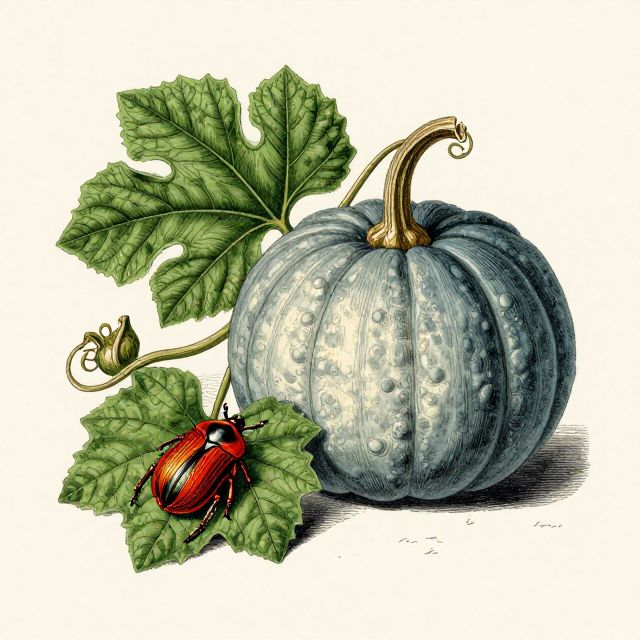
Blue Hubbard squash seed
The best-evidenced practice in companion planting. Grown as a perimeter around squash or melons it held over 94% of striped cucumber beetles off the main crop in UMass and UConn field trials, cutting insecticide use 92–96%.
Only works if you manage it. An untended trap crop breeds pests and makes the problem worse.
Check it on Amazon →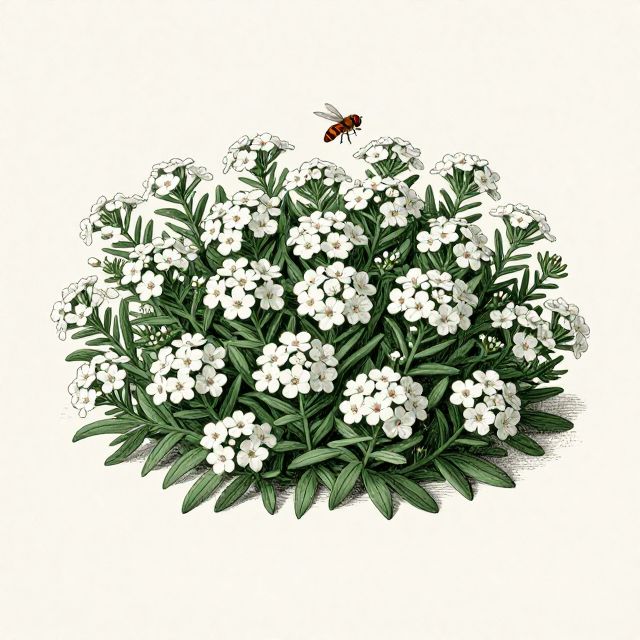
Sweet alyssum seed
The insectary plant with real numbers behind it: USDA-ARS and UC Davis work found aphid suppression associated with alyssum measurable up to 50 feet away, via the hoverflies it feeds.
Plant it beside beds, not scattered inside them — the mixed-blend version tested no better than nothing.
Check it on Amazon →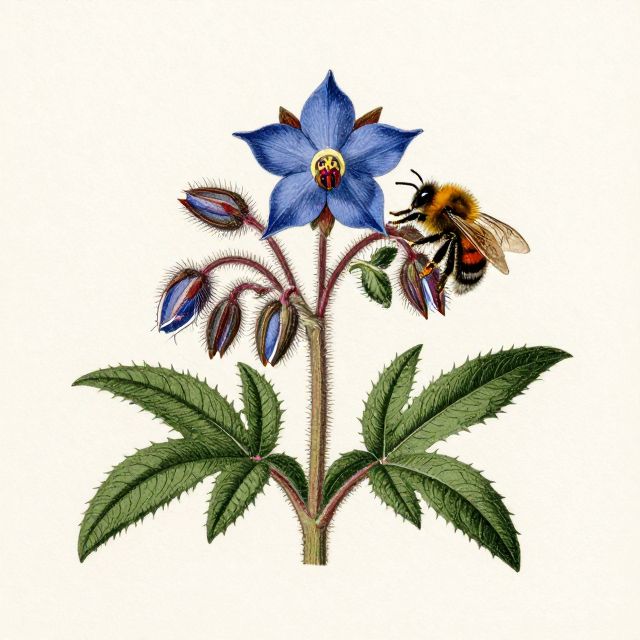
Borage seed
Griffiths-Lee et al. (2020) measured 35% more strawberry fruit by count and 32% more by weight when borage was interplanted, through improved pollination.
It self-seeds enthusiastically. Site it where you don't mind it returning.
Check it on Amazon →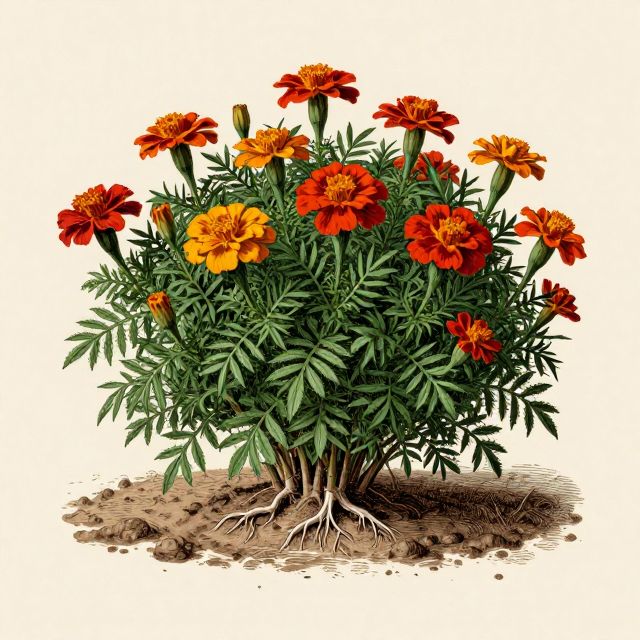
French marigold seed (Tagetes patula)
For the one marigold use that holds up: a dense solid cover crop grown for about two months before the vegetable crop suppresses root-knot nematodes. Not the interplanting version, which UF/IFAS calls ineffective and risky.
Species matters. Signet types are susceptible hosts that can increase nematode populations.
Check it on Amazon →As an Amazon Associate we earn from qualifying purchases. We link these because of what the evidence on this site says, not the other way round — nothing here is recommended on a claim we grade as unsupported, and we take no payment for a placement. How that works →
How we graded this
Each pairing was checked against university extension publications, USDA sources, and peer-reviewed literature. Research-backed requires a controlled trial or extension research measuring the effect. Traditional means widespread practice with a plausible mechanism and no controlled test found. Not supported means tested and not supported, or contradicted.
Where sources disagreed we recorded the disagreement rather than picking a side — see, for example, sage and thyme against diamondback moth, where a greenhouse trial found an effect and a field review did not. Full criteria and limitations are on the methodology page, and every pairing links to its source from the records.