
Square Foot Gardening
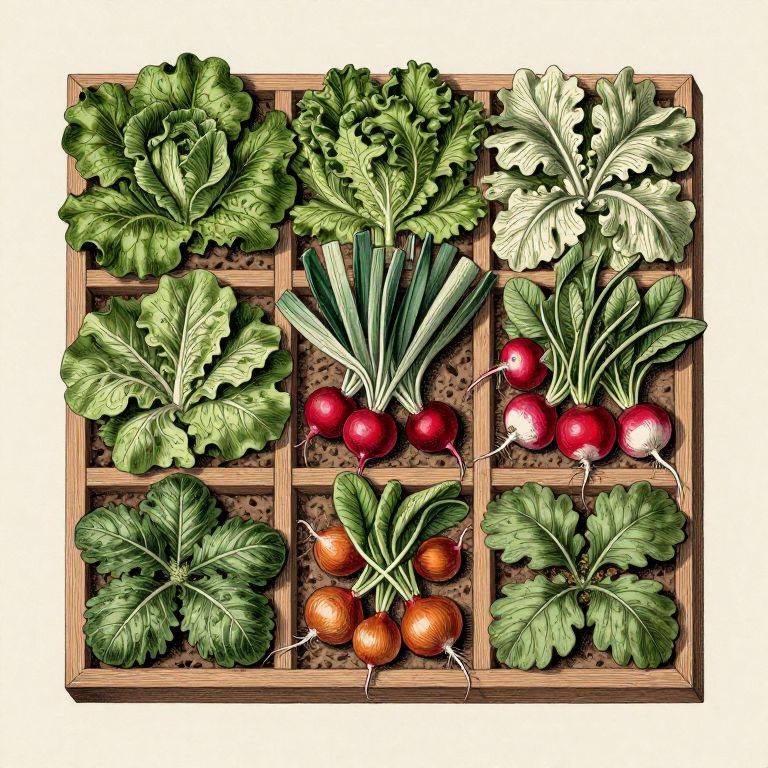
Square foot gardening divides a bed into 1 ft squares and gives each crop a fixed number of plants per square — 16 radishes, 9 spinach, 4 lettuce, 1 tomato. It turns spacing from a judgement call into a lookup, which is why it works so well for beginners and small beds. The full per-square chart for 47 crops is below.
Plants per square foot, by crop
16 per square
2 crops9 per square
8 crops8 per square
2 crops4 per square
12 crops2 per square
2 crops1 per square
21 crops| Crop | Per square | Row spacing it derives from | Mature height |
|---|---|---|---|
| Carrot | 16 | 3 in | 12 in |
| Radish | 16 | 2 in | 8 in |
| Beet | 9 | 3 in | 12 in |
| Bush bean | 9 | 4 in | 24 in |
| Leek | 9 | 6 in | 30 in |
| Onion | 9 | 4 in | 18 in |
| Parsnip | 9 | 4 in | 24 in |
| Spinach | 9 | 4 in | 10 in |
| Turnip | 9 | 4 in | 15 in |
| Cilantro / Coriander | 9 | 6 in | 20 in |
| Pea | 8 | 2 in | 48 in |
| Pole bean | 8 | 6 in | 78 in |
| Arugula | 4 | 6 in | 18 in |
| Celery | 4 | 8 in | 24 in |
| Garlic | 4 | 5 in | 24 in |
| Kohlrabi | 4 | 6 in | 12 in |
| Lettuce | 4 | 8 in | 10 in |
| Swiss Chard | 4 | 6 in | 20 in |
| Strawberry | 4 | 18 in | 10 in |
| Common Thyme | 4 | 8 in | 10 in |
| Parsley | 4 | 10 in | 18 in |
| Calendula / Pot Marigold | 4 | 12 in | 18 in |
| French Marigold | 4 | 8 in | 10 in |
| Sweet Alyssum | 4 | 8 in | 6 in |
| Bok Choy | 2 | 8 in | 12 in |
| Cucumber | 2 | 12 in | 66 in |
| Broccoli | 1 | 18 in | 30 in |
| Brussels Sprouts | 1 | 18 in | 30 in |
| Cabbage | 1 | 15 in | 18 in |
| Cauliflower | 1 | 18 in | 24 in |
| Collard Greens | 1 | 12 in | 30 in |
| Kale | 1 | 12 in | 24 in |
| Okra | 1 | 12 in | 60 in |
| Pepper (sweet/bell) | 1 | 18 in | 30 in |
| Sweet corn | 1 | 10 in | 84 in |
| Sweet Potato | 1 | 12 in | 12 in |
| Tomato | 1 | 24 in | 60 in |
| Basil | 1 | 12 in | 24 in |
| Borage | 1 | 15 in | 30 in |
| Chives | 1 | 8 in | 15 in |
| Dill | 1 | 12 in | 36 in |
| Garden Sage | 1 | 18 in | 24 in |
| Greek Oregano | 1 | 12 in | 24 in |
| Rosemary | 1 | 24 in | 48 in |
| Spearmint | 1 | 15 in | 18 in |
| Nasturtium | 1 | 10 in | 12 in |
| Sunflower | 1 | 18 in | 72 in |
Crops that don't fit the method
These need more room than a single square provides, or object to being transplanted into a grid. Give them their own space and treat the surrounding squares as their territory.
Where the method quietly breaks down
Square foot gardening is genuinely useful, and it is also oversold. Three honest limitations:
- Water competition. Dense planting only works with consistent water. In hot, dry climates or unirrigated beds, sixteen carrots in a square will compete each other into pencil stubs. Spacing exists partly to ration soil moisture.
- Airflow and disease. In humid regions, crowded foliage stays wet longer, and fungal diseases like powdery mildew and early blight spread faster. This is the reason to be conservative with tomatoes in particular.
- The six-inch bed. The original method calls for a 6 inch deep bed. That is fine for salad but shallow for almost anything else; 10–12 inches noticeably improves results and costs little more. Work out the extra soil →
Where these numbers come from. We derive per-square counts from extension-published in-row spacing (3 in → 16, 4 in → 9, 6 in → 4, 12 in → 1). Extension services publish spacing but almost never publish square-foot densities, so these are a consistent conversion rather than an independently sourced figure — honest about its provenance, unlike most charts that present them as fact.
Put it into practice
The garden planner is built on exactly this grid — each square is one square foot and shows the per-square count for whatever you plant in it, while checking neighbouring squares for recorded conflicts. Or start from a ready-made layout.
Watering a dense bed
RequisitionClose spacing only works with consistent water. This is the constraint that quietly breaks square foot gardening in hot or unirrigated gardens.
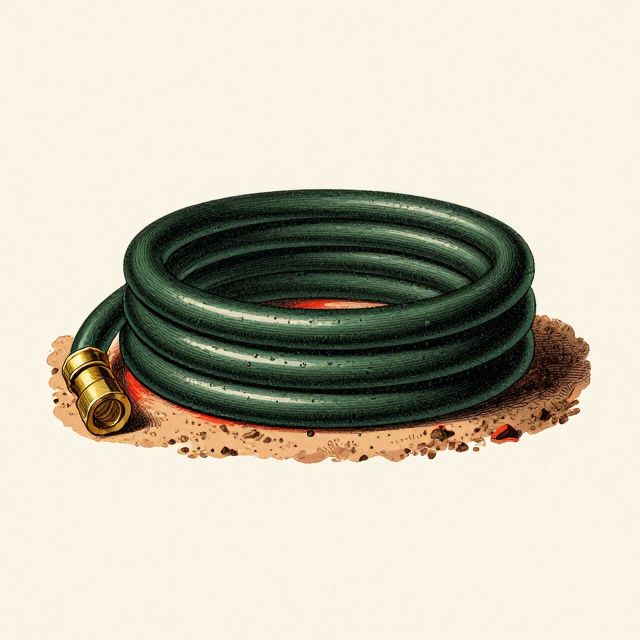
Soaker hose
Delivers water at the roots without wetting foliage, which matters because wet leaves are how fungal disease spreads through a crowded bed.
Runs of more than about 50 ft water unevenly — split into zones instead.
Check it on Amazon →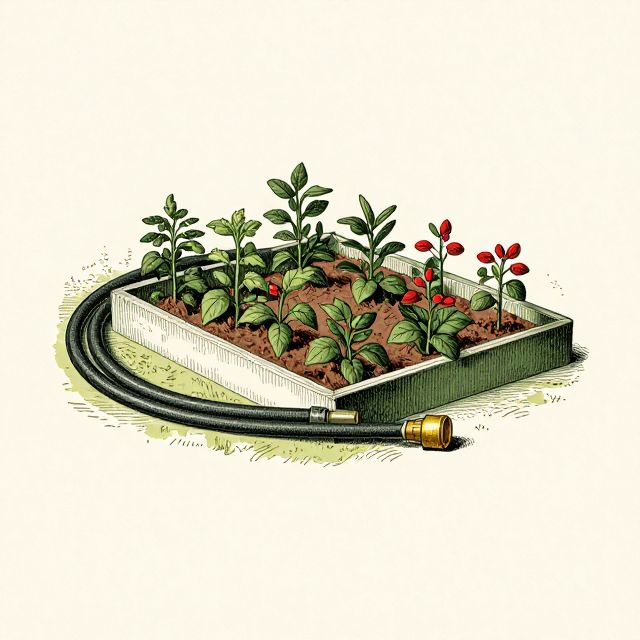
Drip irrigation kit
The most reliable fix for the crops this site flags as needing steady moisture — the ones that split, bolt or develop blossom end rot when watering is erratic.
Add a timer. The benefit is consistency, and consistency is what humans are bad at.
Check it on Amazon →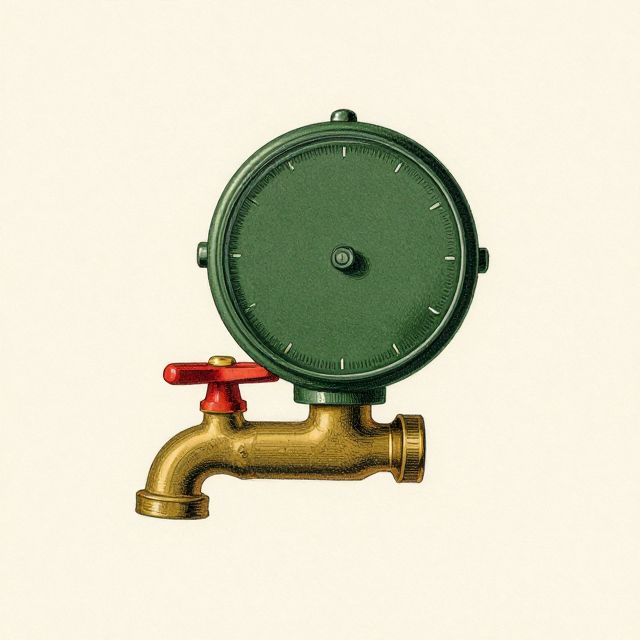
Hose timer
Turns a soaker hose into an irrigation system. Uneven watering causes more crop failures in raised beds than any pest on this site.
Check it on Amazon →As an Amazon Associate we earn from qualifying purchases. We link these because of what the evidence on this site says, not the other way round — nothing here is recommended on a claim we grade as unsupported, and we take no payment for a placement. How that works →