
USDA Hardiness Zones Explained
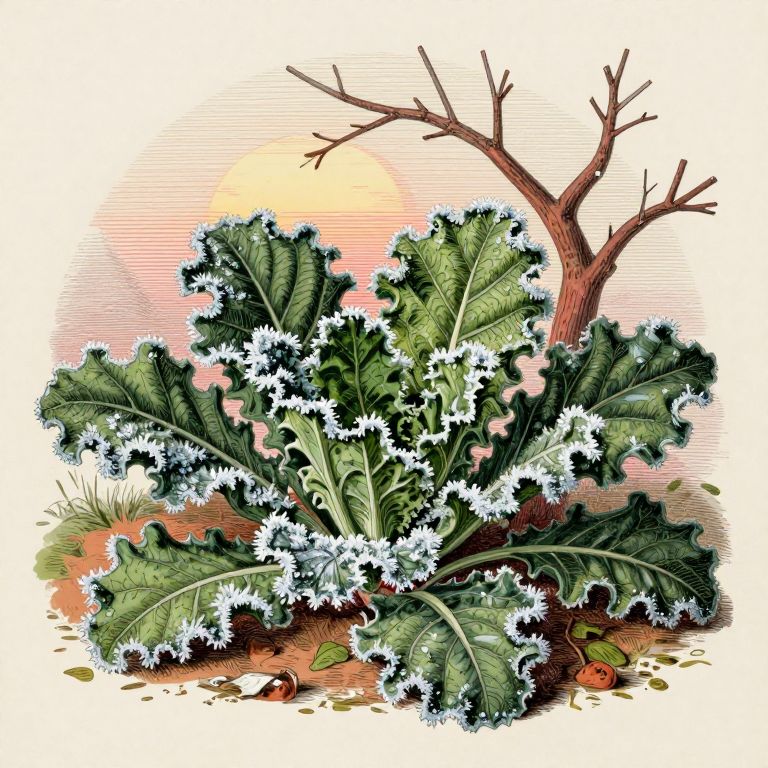
A USDA hardiness zone is one number: the average annual extreme minimum winter temperature. Each zone spans 10°F, each letter half 5°F. It tells you what perennials survive your winter — and nothing else. It does not tell you your frost dates, your growing season length, or when to plant, which is what most people reach for it to answer.
Look up your frost dates
Form GL‑3What the zone actually answers
The question "will this perennial survive here over winter?" That is what the map was built for, and it does it well. A shrub rated to zone 5 will normally come through winter anywhere in zone 5 or warmer.
The trouble starts when the zone is asked to answer a different question. Planting timing depends on when spring frost ends — a completely separate variable that the map does not measure. Two gardens can share a zone and have frost dates weeks apart:
- Atlanta and Dallas–Fort Worth are both zone 8a, and differ by roughly 20 frost-free days.
- Houston and Seattle are both zone 9a — one humid subtropical, one cool maritime. A Houston planting calendar is actively wrong in Seattle.
This is why every planting date on this site is derived from frost normals rather than from the zone itself, and why we describe those dates as representative rather than exact. Full caveats →
All USDA hardiness zones
| Zone | Winter minimum | Representative areas | Typical season |
|---|---|---|---|
| Zone 3a | -40°F to -35°F | International Falls, MN, Gunnison, CO, Havre, MT | 104 days |
| Zone 3b | -35°F to -30°F | Bemidji, MN, Devils Lake, ND, Houlton, ME | 120 days |
| Zone 4a | -30°F to -25°F | Fargo, ND, Duluth, MN, Caribou, ME | 140 days |
| Zone 4b | -25°F to -20°F | Bismarck, ND, Eau Claire, WI, Berlin, NH | 152 days |
| Zone 5a | -20°F to -15°F | Minneapolis, MN, Green Bay, WI, Sioux Falls, SD | 162 days |
| Zone 5b | -15°F to -10°F | Rockford, IL, Des Moines, IA, Albany, NY | 172 days |
| Zone 6a | -10°F to -5°F | Chicago, IL, Columbus, OH, Denver, CO | 184 days |
| Zone 6b | -5°F to 0°F | Cincinnati, OH, Kansas City, MO, Hartford, CT | 199 days |
| Zone 7a | 0°F to 5°F | St. Louis, MO, Louisville, KY, Salt Lake City, UT | 213 days |
| Zone 7b | 5°F to 10°F | Nashville, TN, Oklahoma City, OK, Albuquerque, NM | 229 days |
| Zone 8a | 10°F to 15°F | Atlanta, GA, Dallas, TX, Raleigh, NC | 242 days |
| Zone 8b | 15°F to 20°F | Charleston, SC, Austin, TX, Wilmington, NC | 261 days |
| Zone 9a | 20°F to 25°F | Houston, TX, Jacksonville, FL, Seattle, WA | 282 days |
| Zone 9b | 25°F to 30°F | Orlando, FL, New Orleans, LA, Phoenix, AZ | 307 days |
| Zone 10a | 30°F to 35°F | Tampa, FL, Brownsville, TX, Pasadena, CA | 338 days |
| Zone 10b | 35°F to 40°F | Miami metro (Fort Lauderdale), FL, Los Angeles, CA, Naples, FL | frost-free |
| Zone 11a | 40°F to 45°F | Miami, FL, Key Largo, FL, Marathon, FL | frost-free |
| Zone 11b | 45°F to 50°F | Key West, FL, Lower Florida Keys, FL | frost-free |
The 2023 map changed things
The current map was released in November 2023, built from 1991–2020 data across 13,412 weather stations by USDA ARS with Oregon State University's PRISM Climate Group. It replaced the 2012 edition, and about half the country shifted roughly half a zone warmer — partly a warming climate, partly better mapping and more stations.
Practically: if you learned your zone before 2024, check it again. And a plant tag or chart printed on the older map may be a half zone out.
Where zone maps mislead most
Zone boundaries are interpolated across the landscape, so they smooth over terrain that gardens actually feel. Expect the map to be least reliable in:
- Mountains — the Appalachians, Rockies, Sierra and Cascades, where elevation changes the zone within a few miles.
- Coastlines and the Great Lakes — water moderates winter minimums dramatically over short distances.
- Cities — urban cores routinely run a half zone warmer than surrounding countryside, and hold autumn frost off by a week or more.
- Your own garden — a frost pocket at the bottom of a slope can run two weeks behind the top of the same hill.
Our ZIP lookup covers 901 prefixes and resolves each to its dominant zone, which is an approximation for exactly these reasons. It shows you the zone it picked so you can override it.
Zones say nothing about heat. A plant can be perfectly hardy through your winter and still fail in your summer. The USDA map has no heat equivalent in common use, which is why "hardy to zone 5" tells you nothing about whether something will survive a Texas August. Where summer heat is the limiting factor, local extension guidance beats any national map.
Use it for the right job
Use your zone to choose perennials, fruit trees and shrubs. Use your frost dates to decide when to plant, and the planting calendar to turn those dates into a schedule.
Buying weeks at either end of the season
RequisitionYour last frost date is a median — half of years the last freeze lands after it. These are how you plant on schedule anyway.
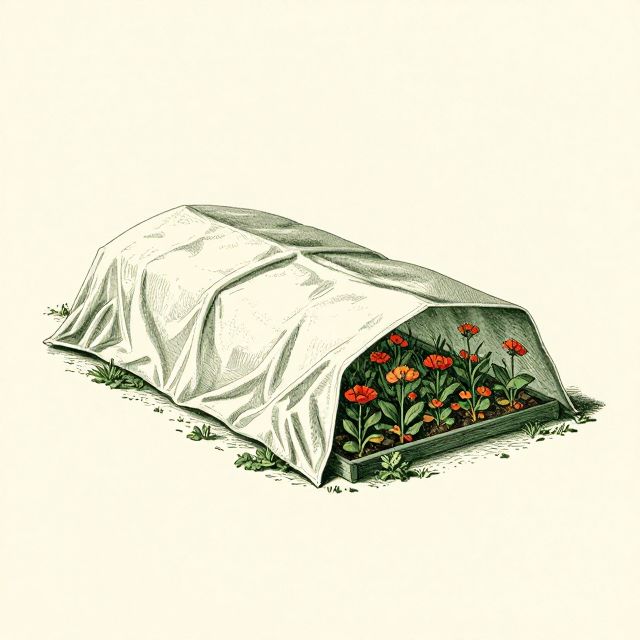
Floating row cover
This site's advice is to plant on schedule and keep row cover to hand for a cold night. A few degrees of protection is the difference between a lost tomato planting and a shrug.
Lighter weights are for insect exclusion; heavier weights are for frost. They are not interchangeable.
Check it on Amazon →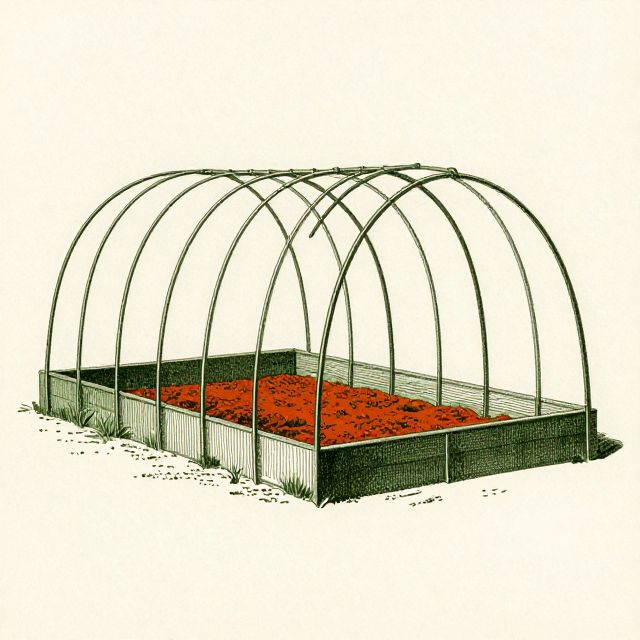
Garden hoops
Row cover resting on foliage transmits cold to the leaves it touches and abrades them in wind. Hoops hold it clear, which is most of why it works.
Check it on Amazon →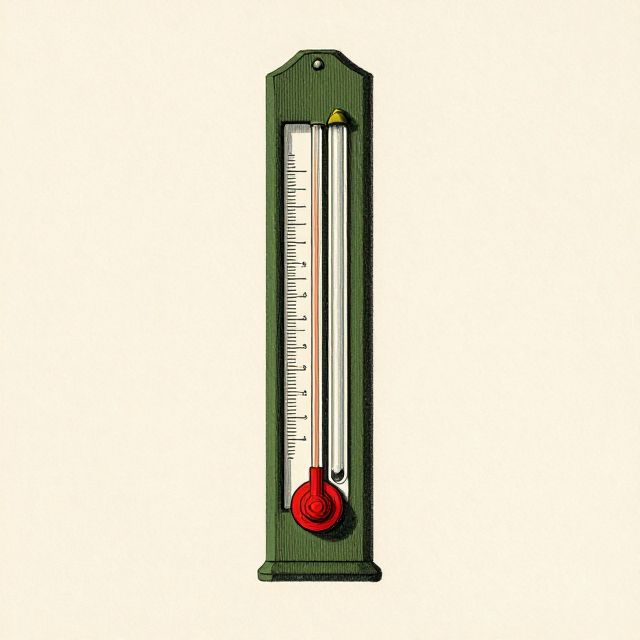
Min/max thermometer
Records the actual overnight low in your garden, which is what tells you whether your own frost dates run ahead of or behind your zone's median. After two seasons your records beat any national dataset.
Site it at plant height, not on a wall — walls hold heat.
Check it on Amazon →As an Amazon Associate we earn from qualifying purchases. We link these because of what the evidence on this site says, not the other way round — nothing here is recommended on a claim we grade as unsupported, and we take no payment for a placement. How that works →